
BUSINESS
Store Prices Look Calm as Warsh’s Fed Prepares to Hike
Core CPI may ease to 2.4 percent, but diesel, wholesale inflation and Warsh’s PCE test have already lifted September hike odds to 70 percent.

Traders on Thursday put a 70 percent chance on a Federal Reserve rate hike at the September 16 meeting after wholesale prices and crude oil both broke higher. U.S. crude jumped 4 percent to just over $100 a barrel, and the producer price index rose 0.4 percent in August.
The last consumer inflation print before that sitting, due at 8:30 a.m. ET on September 11, is still expected to show core store prices easing to 2.4 percent over the year. That is the calm reading. It is no longer the one that sets the call.
The 24.1 Percent Diesel Spike Inside Wholesale Prices
The Bureau of Labor Statistics said the Producer Price Index for final demand rose 0.4 percent in August after a 0.1 percent gain in July and a 0.1 percent drop in June, lifting the 12-month rate to 5.4 percent. Goods prices jumped 1.1 percent. Energy alone was up 4.2 percent and accounted for more than three-fourths of that goods rise.
Inside the goods basket, more than a third of the increase traced to diesel fuel, which jumped 24.1 percent. Gasoline, jet fuel and home heating oil also advanced. Truck transportation of freight rose 2.0 percent, and final demand transportation and warehousing services were up 2.3 percent. Trade services fell 0.2 percent. Margins for fuels and lubricants retailing dropped 11.3 percent, a sign some sellers ate the cost instead of passing it on.
HOW THE INFLATION GAUGES COMPARE
| Gauge | Latest reading | What it captures |
|---|---|---|
| July CPI | +0.1% month, 3.4% year | Store prices, almost flat on the month |
| August CPI (forecast) | +0.4% month, 3.4% year; core 2.4% year | Energy rebound with a cooler core |
| August PPI | +0.4% month, 5.4% year | Wholesale goods, diesel and freight |
| July PCE | 3.7% year; core 3.3% | The Fed’s official inflation yardstick |
Strip out foods, energy and trade services and wholesale prices still rose 0.3 percent in August and 4.7 percent over the year. Goods less foods and energy were up 0.4 percent. Further back in the pipeline, processed goods for intermediate demand climbed 1.8 percent on the month and 11.5 percent over 12 months, with diesel again doing most of the monthly work.
WHERE AUGUST WHOLESALE PRICES JUMPED
- Diesel fuel: Prices jumped 24.1 percent and supplied more than a third of the rise in final demand goods.
- Final demand energy: The group rose 4.2 percent and accounted for more than three-fourths of the 1.1 percent goods increase.
- Freight and warehousing: Truck transportation of freight rose 2.0 percent, and transportation and warehousing services were up 2.3 percent.
- Pump margins: Fuels and lubricants retailing fell 11.3 percent, so some of the wholesale hit stopped before the sticker.
David Russell, global head of market strategy at TradeStation, said more pressure is coming because crude and refined products have kept rising since the August data was collected, and that the oil spike plus low jobless claims make it hard for the Fed not to hike. August gasoline averaged $4.192 a gallon, up from $4.064 in July, according to the Energy Information Administration.
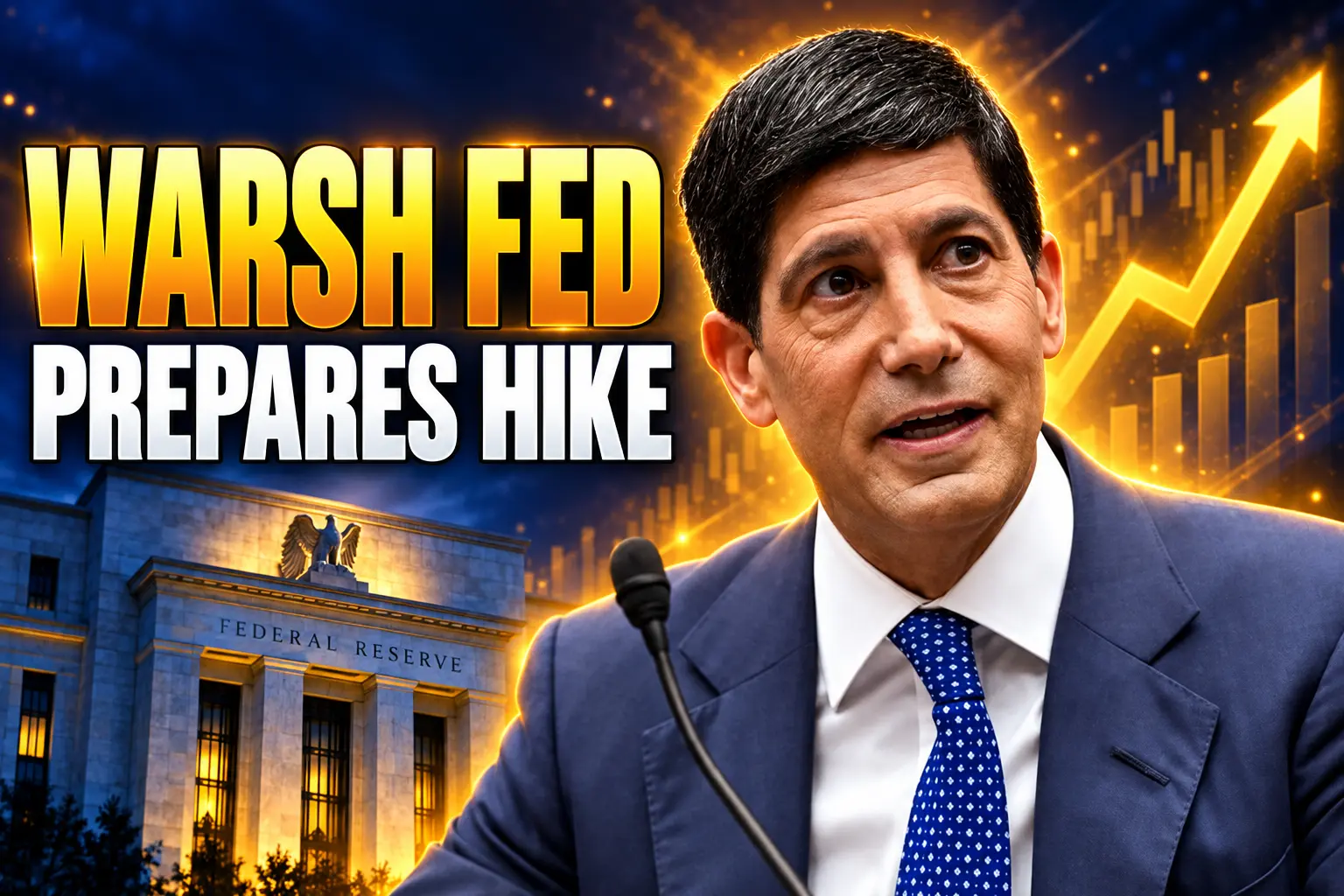
Warsh Set a Test the Data Are Failing
Fed Chair Kevin Warsh does not treat the consumer price index as the target. In his first Jackson Hole keynote as chair on August 28, his 100th day in the job, he restated a firm, fixed 2 percent PCE target and said price stability is not self-executing.
Here is my standard: We must be confident that underlying inflation is moving to our objective, clearly and at sufficient speed. Otherwise, we have work to do.
Kevin Warsh, Federal Reserve Chair, Jackson Hole symposium
The personal consumption expenditures price index stood at 3.7 percent over 12 months in July, with the six-month change at 4.1 percent. Core PCE was 3.3 percent. Warsh also said credit and loan markets were showing few signs of policy restraint with the funds rate parked at 3.50 to 3.75 percent, the range in place since the December cut and through five straight holds.
He told the room not to call his outline forward guidance. He wants a quieter Fed and has floated fewer rate meetings. The September sitting still publishes a Summary of Economic Projections and a dot plot. That is the first chance since Jackson Hole for officials to put numbers on the “work to do” line.
Three officials already preferred a quarter-point increase at the July 28-29 meeting. Bank of America senior U.S. economist Stephen Juneau, after the August PPI, had core PCE tracking at a 0.26 percent monthly rate, which rounds to 0.3 percent. He said that path should greenlight a hike, and BofA still expects three increases at upcoming meetings, one of the most hawkish house views on the Street.
Why a Cool Core CPI May Not Stop a Hike
The Bureau of Labor Statistics will release the August CPI at 8:30 a.m. ET on September 11. The Dow Jones consensus is a 0.4 percent monthly rise and a 3.4 percent annual rate, matching July. Core prices, excluding food and energy, are expected to rise 0.2 percent on the month and 2.4 percent over the year, down from 2.5 percent in July.
A cluster of 17 core monthly estimates, ranging from 0.16 percent to 0.24 percent, all round to 0.2 percent, with a median of 0.22 percent. That in-line print is already in the price. An on-forecast core would not, on its own, unwind a 70 percent hike bet built on wholesale energy and the PCE math.
Peter Boockvar, chief investment officer at OnePoint BFG Wealth Partners, said a soft CPI can just mean firms are having a harder time passing higher prices to consumers, and that people who look only at consumer prices are missing inflation still sitting in the supply chain. The 11.3 percent drop in fuel retailing margins in the PPI is the same idea in a single line.
Jeffrey Roach, chief economist at LPL Financial, wrote that as the Iran conflict drags on longer than many expected, inflation pressures are becoming entrenched, and that at this rate a hike next week appears likely. Payrolls in August rose 162,000 and the unemployment rate was 4.1 percent, so the labor side is not handing the committee an easy pause.
Frankfurt Moved First on the Oil Shock
The European Central Bank did not wait for another U.S. print. On September 10 its Governing Council voted to raise the three key ECB interest rates by 25 basis points, taking the deposit rate to 2.50 percent, the main refinancing rate to 2.65 percent and the marginal lending rate to 2.90 percent from September 16. It is the ECB’s second hike of 2026, after June.
The conflict in the Middle East continues to generate inflation pressures, and inflation is set to remain well above target for an extended period.
European Central Bank Governing Council, September 10, 2026
Staff projections put headline inflation at 3.0 percent in 2026, 2.5 percent in 2027 and 2.1 percent in 2028. Inflation excluding energy and food is seen at 2.5 percent, 2.6 percent and 2.3 percent. Growth was revised up to 0.9 percent this year, 1.4 percent next year and 1.5 percent in 2028. The 2026 inflation forecast was unchanged from June; 2027 and 2028 were raised. The council said it is not pre-committing to a path.
That is the same oil shock, treated as persistent rather than a one-month blip. U.S. officials who still want to look through energy now have a large peer that refused to.
Futures Price a Hike Banks Have Not Called
Federal funds futures on Thursday morning implied a 70 percent chance of a quarter-point move on September 16 on the CME FedWatch probabilities for September, with the leftover 30 percent on a hold. Traders also pushed the chance of another increase in December to close to 60 percent. A hike would lift the target range to 3.75 to 4.00 percent.
House forecasts have been slower. A tally of formal calls circulating Thursday showed only UBS, Barclays and SocGen had switched to a September hike after the Jackson Hole speech. Most desks had not yet moved their published path even as the futures contract did. That gap is the live argument: the market is trading Warsh’s test, while many written forecasts are still written for a hold.
WHERE FORECASTS DISAGREE
- Funds futures: CME FedWatch on Thursday morning priced a 70 percent chance of a quarter-point hike on September 16 and close to 60 percent for another increase in December.
- Bank of America: Stephen Juneau’s note, after the PPI, kept three hikes on the calendar and treated a 0.26 percent core PCE month as a green light.
- Hold camp: Some fund managers argue a core CPI at 0.2 percent, and anything short of 0.30 percent, still lets the committee wait, and a few still bet Warsh will not move before the midterms.
The political objection is loud and unproven. Warsh spent Jackson Hole refusing to pre-commit and telling markets to stop treating the chair as their next trade. A hold after 3.7 percent PCE, 4.1 percent on a six-month basis, $100 oil and a 24.1 percent diesel spike would have to be explained against his own standard, not against a campaign calendar.
What a Quarter Point Would Cost Borrowers
The funds rate has sat at 3.50 to 3.75 percent since December. Another 25 basis points is a small step on paper. It would still be the first increase since the last easing, and it would arrive with a new set of dots that can reprice mortgages, auto loans and floating-rate credit before anyone hears the press conference.
Warsh said in August that short-term rates are the predominant tool and that credit markets were not showing much restraint. If officials agree with him, they are hiking into an economy they view as still too easy, not into a crunch. Borrowers who refinanced into the last dip would feel the next move first in home-equity lines, credit cards and any loan that resets off prime or SOFR.
Diesel is already doing that work in freight. A 24.1 percent monthly jump in wholesale diesel, plus a 2.0 percent rise in truck freight, is a cost that lands on grocers, builders and anyone who moves goods before it shows up in the core CPI the forecasts keep celebrating. The cooler 2.4 percent core is the lag. The pipeline is the lead.
September 16 Also Brings a New Dot Plot
The September 15-16 FOMC meeting is one of four 2026 sittings that carry a Summary of Economic Projections. The rate decision is due at 2:00 p.m. ET on September 16, with Warsh’s press conference at 2:30 p.m. Remaining meetings are October 27-28 and December 8-9, the latter with another round of projections.
FROM JACKSON HOLE TO THE RATE CALL
- August 28, 2026: Warsh tells Jackson Hole the 2 percent PCE target is firm and that the Fed has work to do if inflation is not clearly moving toward it.
- September 4, 2026: August payrolls rise 162,000 and unemployment holds at 4.1 percent, leaving little slack for a dovish pause.
- September 10, 2026: PPI rises 0.4 percent, diesel jumps 24.1 percent, U.S. crude clears $100, and the ECB hikes 25 basis points.
- September 11, 2026: The BLS releases August CPI, the last inflation report the committee gets before it votes.
- September 16, 2026: The FOMC announces its decision at 2:00 p.m. ET and publishes a new dot plot.
A matching core CPI would still leave officials staring at 3.7 percent PCE, a 5.4 percent wholesale rate and a diesel print that has not yet fully reached the store. The statement lands at 2:00 p.m. ET on September 16. The dots will say whether this is one move or the start of a path.
Disclaimer: This article is news reporting and analysis of market pricing, official inflation data and central bank communications, and it is for information only. It is not investment advice, a recommendation to buy or sell any security or futures contract, or a prediction of the Federal Open Market Committee’s vote. Readers who may act on interest-rate or inflation news should consult a licensed financial adviser or investment professional who can consider their own situation. Figures such as CME FedWatch odds, BLS price indexes and staff forecasts reflect the sources as of the dates given in the piece and can change with the next print or the next trade.

Russia Makes Factory Owners Buy Air Defense They Cannot Run

ABC Wants Kimmel Back at a 20 Percent Discount

Missouri Leaves Kansas Bleeding After a 38-21 Border War

California Bans Companion Chatbot Toys Without a Safety Off-Ramp

Nintendo Recycles a Tariff Refund Into a 30% Sale

Sons of Behemat Add a Witch and a Middle Rank

The FTC Suit That Targets Amazon’s Hidden Ad Floor

Apple’s Foldable iPhone Event Revives the Fingerprint Button

Canada Still Clears Mazatlán as the Cartel War Arrives

Kyiv Railway Workers Die as Patriot Missiles Run Short
-
 GAMING3 weeks ago
Sons of Behemat Add a Witch and a Middle Rank
-
 BUSINESS4 weeks ago
The FTC Suit That Targets Amazon’s Hidden Ad Floor
-
 NEWS1 month ago
Apple’s Foldable iPhone Event Revives the Fingerprint Button
-
 NEWS2 years ago
Canada Still Clears Mazatlán as the Cartel War Arrives
-
 NEWS4 weeks ago
Kyiv Railway Workers Die as Patriot Missiles Run Short
-

 NEWS3 weeks ago
Aaron Judge Returns, and the Yankees Skip the Minors
-

 LIFESTYLE2 years ago
Women, Gym, and Affairs: A Complex Intersection
-

 LIFESTYLE2 years ago
The Unstoppable Rise of Hot Honey: Are Food Trends Making UK Restaurant Menus All the Same?