
LIFESTYLE
How to Wash Police Uniform at Home by the Fabric Line
How to Wash Police Uniform gear by the label: cold gentle for polywool, hang dry for wool, warm or cold for polyester, and keep vest panels out of the machine.

The shirt comes off after a long shift, and the easy move is one load with the rest of the house. That single load is how a uniform shrinks, felts, or goes dull before the trousers wear out. A police uniform is not one fabric. Shirts and trousers may be polywool, all wool, polyester, or polycotton, and the wash changes with the cloth.
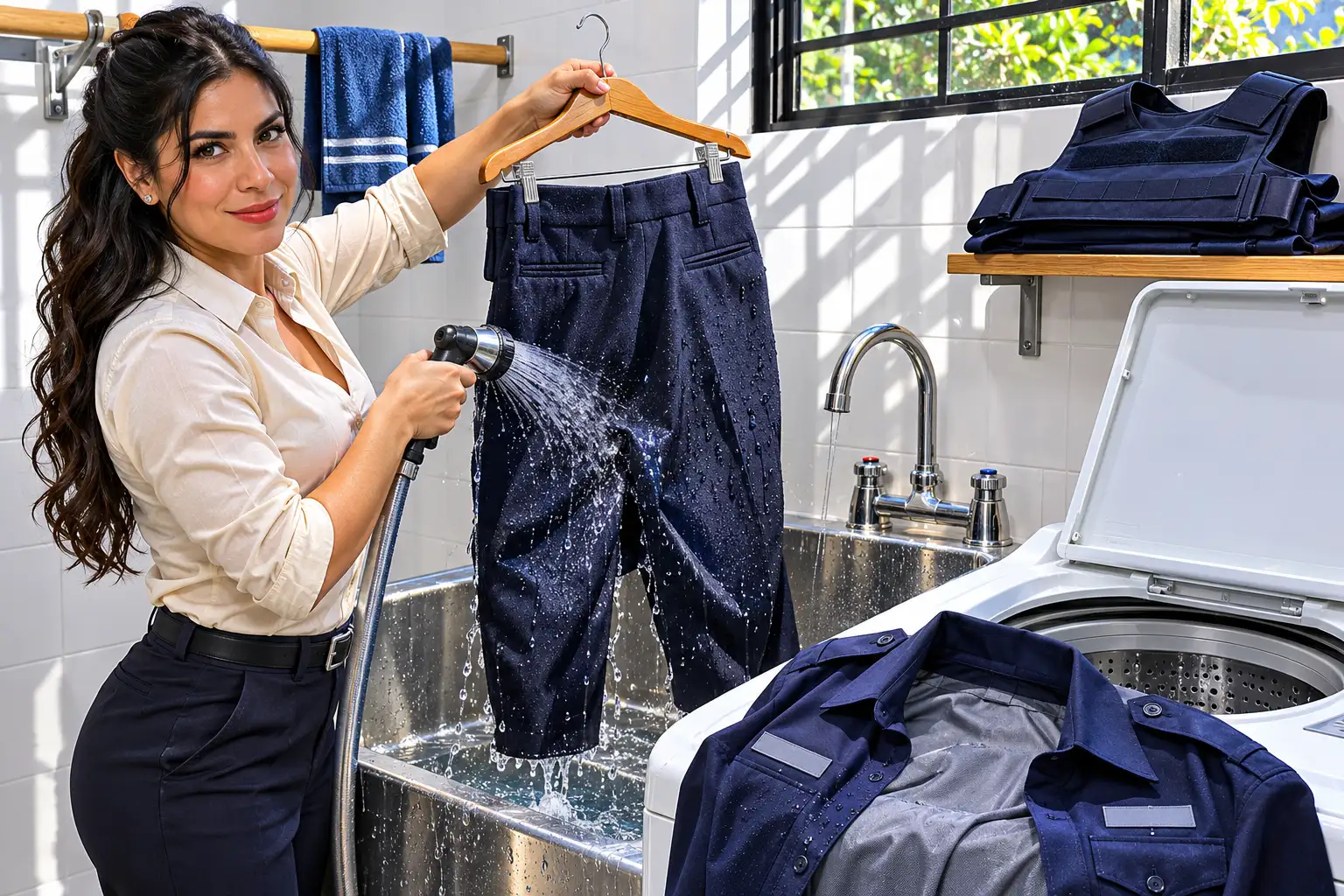
How to wash police uniform gear starts with the label, not with the hottest cycle the machine offers. Polywool gets cold water on the gentle cycle. All-wool trousers get a hand wash and a hanger. Polyester and polycotton can take warm or cold water, turned inside out, then the lowest dryer heat. Vest panels stay out of the machine. If blood is on the cloth, that piece stays in a bag until you know whether it belongs in a home washer at all.
The pages below sort the fabric lines, the steps before you press start, stains, the ballistic vest, drying and pressing, and the mistakes that take the fit out of a shirt.
What Does a Police Uniform Care Label Tell You?
Most Class A uniforms are all-wool trousers, a polywool blend, all polyester, or a polycotton blend. The Flying Cross care and maintenance page gives a home method for each, written with mill partner Burlington Raeford. The tag sewn into your garment still wins if it disagrees with a general note, because the blend changes by line.
Legend trousers are 55% polyester and 45% wool. Justice shirts and trousers are 75% polyester and 25% wool. Command shirts and trousers are 100% polyester. Cross FX, Cross FX Elite, and Valor are polycotton. Another maker’s shirt needs that maker’s label read the same way. Wool content, and any flame-resistant mark, changes the cycle.
The split people skip is polywool versus all wool. Polywool can take a gentle cold wash when a dry cleaner is not available. All-wool trousers are a hand wash, and testing on that fabric is not finished, so the hand-wash rule stands until the maker posts a new one.
| Line | Fabric | Wash | Dry |
|---|---|---|---|
| Legend | 55% polyester and 45% wool, trousers only | Cold water, gentle cycle. Dry clean when you can. | Lowest heat. Remove slightly damp, or just as it dries. |
| Justice | 75% polyester and 25% wool, shirts and trousers | Same cold gentle wash as Legend | Same lowest heat, removed slightly damp or just dry |
| All-wool trousers | 100% wool | Hand wash in Wool-Lite only | Hang dry. No machine dryer. |
| Command | 100% polyester | Warm or cold, not hot. Wash inside out. | Lowest heat |
| Cross FX, Cross FX Elite, Valor | Polycotton | Warm or cold, not hot. Wash inside out. | Lowest heat |
A Command shirt and a pair of Legend trousers from the same shift are two loads. The shirt is turned inside out and washed warm or cold. The trousers wait for a cold gentle cycle, or a dry cleaner. Putting them through together to save a half hour is how the wool side felts while the polyester side is fine.
What to Do Before You Wash a Police Uniform
Separate garments worn outside, or possibly exposed to harmful viruses or bacteria, before they go near other clothes. Do not shake them. Shaking throws dust, and whatever is on the cloth, into the room. Bag those pieces apart from the household laundry until you can wash them safely, then take them out and follow the fabric row above.
A flame-resistant apparel sheet from the same maker, built from public-health handling advice, adds three habits. Wear disposable gloves when you handle a dirty uniform, and throw the gloves away after. Do not sit around the house in the uniform once you are home. Wash an exposed garment instead of leaving it in a heap. Empty the pockets, pull pens and loose metal, and close zippers and hooks so they do not catch the next shirt.
Wash the uniform apart from family clothes. A separate wash stops dye from moving onto other clothes, which is why the Propper fabric care instructions tell you to keep uniforms out of the household load. A dark navy shirt next to a pale towel is the same problem.
Sweat and road dust are a home wash. Blood, or other body fluid that could carry infection, is not that load. The bloodborne pathogens standard at 29 CFR 1910.1030 treats laundry soiled with blood or other potentially infectious material as contaminated laundry. Where a uniform is worn as protective equipment, the standard says the employer provides it, launders it, repairs it, and replaces it, and the officer does not wear it home. OSHA’s 1993 letter on police uniforms, dated April 19, 1993 and sent to a Miami police lodge, adds the limit: federal OSHA does not have jurisdiction over state and local law enforcement and cannot enforce that standard there. Your department’s exposure plan is the rule that binds you. Bag the garment, tell a supervisor, and do not run it through the family washer to feel safer.
Ordinary soil sits on the other side of that line. The CDC guidance on contaminated laundry says uniforms without blood or body-substance contamination are not much different from street clothes, and a home wash is expected to remove that soil. The page is written for health-care clothing. Use it only as the split between a sweaty shirt and a bloody one.
How to Wash Police Uniform Shirts and Trousers
With the bagging done and the label read, the machine settings are short. They are not one setting you can reuse on every piece in the closet.
Polywool Blend Shirts and Trousers
Legend and Justice are the polywool lines. Most polywool is dry cleaned. The home rules apply when that service is not available, and they are narrow on purpose.
POLYWOOL AT HOME
- The cycle: Cold water and the gentle cycle only.
- The additives: No bleach, no bleach additives, no fabric softener, and no dryer sheets.
- The dryer: Lowest heat, then take the garment out while it is slightly damp or just dry.
A dirtier shirt is not a reason to jump to a heavy cycle. Stay on gentle, or take the set to a cleaner. Agitation is what felts wool fibers in a blend and pulls the shape out of a dress trouser.
All-Wool Trousers and the Dryer Ban
WOOL TROUSERS STAY OUT OF THE DRYER
Hand wash in Wool-Lite only, then hang dry. Never put them in a machine dryer. Heat and tumbling can shrink the wool and damage the fibers, and the maker has not posted a machine method to replace this one.
Press the water out without a hard twist, hang the trousers on a clip hanger, and keep them out of direct sun and off a heater vent. If the tag in your pair says dry clean only, that tag replaces the hand wash. The general note is the fallback, not a permission slip to ignore a stricter label.
Polyester and Polycotton Duty Wear
Command is 100% polyester. Cross FX, Cross FX Elite, and Valor are polycotton. These are the easy-care lines, and hot water is still off the list.
- Turn the shirt or trousers inside out so the color on the outside face stays brighter.
- Wash in warm or cold water, and do not use hot water.
- Use a mild detergent. Do not add a product the label bars, and skip fabric softener so residue does not sit in the tub for the next load.
- Tumble dry on the lowest heat setting.
Open the Propper page again if the shirt is tactical or flame resistant rather than a standard polyester Class A. Those garments wash cold on the tactical notes. On the flame-resistant notes, warm water stops at 120°F (49°C). Chlorine bleach, detergents with hydrogen peroxide, fabric softener, and starch are out, because softener and starch coat the cloth and bleach wrecks the finish. Run a double rinse. Skip the dryer if the garment has reflective trim. Blood on a flame-resistant piece goes in a leak-proof bag for an industrial wash, not into this home cycle.
The printed detergent amount on those flame-resistant instructions is 1 cup (8 oz) of heavy-duty detergent per load, or 1.5 cups if your water is hard. That dose is for that Propper wash, not a guess you pour into a polywool gentle cycle.
How to Treat Sweat and Stains on a Police Uniform
A mark you leave for the machine is the one hot water would set, so treat it while it is fresh and keep the water cold if it might be blood. Your polyester lines already bar hot water. Keep that bar when the shirt looks filthy.
For sweat, turn the shirt inside out so the side against your skin meets the wash, leave room in the drum, and do not hang the shirt away until it is fully dry. A damp shirt in a closed hamper or a locker holds odor into the next shift. Propper also says to pre-soak and spot-treat a tactical garment that is heavily soiled before the cycle.
A small blood spot is a home job only after your department has cleared that piece for home washing. Blot it with cold water. Do not scrub, and do not switch to warm water to lift it. Work a little mild detergent from the edge of the spot toward the middle, then wash on the cycle for that fabric. Chlorine bleach stays out. Hydrogen peroxide stays off anything flame resistant.
Road grease and food grease loosen if you dab mild detergent on the spot and give it a few minutes before the wash. Stick to that detergent and the cycle on the label. Strong solvents are a guess the polyester does not need.
How to Clean a Ballistic Vest Without Washing the Panels
The carrier and the armor are different objects. Washing them as one piece is how panels get ruined. On the Safariland body armor use and care page, machine washing, tumble drying, bleach, ironing, and tape are all barred for the panels. Do not machine-wash or tumble-dry ballistic panels. Wipe them on a flat surface with a damp cloth or sponge and, if you need it, a mild detergent.
Pull the panels, the trauma inserts, and any plates out of the carrier before water touches the shell. Disengage the suspension tabs at the shoulders, and take the straps off for a wipe of their own. The strike face points away from your body. Putting a panel back in the wrong way can cause serious injury or death, so read the panel as you reassemble it. Do not mix panels and carriers from different brands. Wearing the shell with no panels in it does not protect you.
Safariland’s own video shows the panel wipe and the wash for the empty carrier.
Hand washing the carrier in cold water with a mild detergent is the method that page prefers. A gentle machine cycle in cold water is also allowed. A damp cloth cleans the straps. Hook tabs pull lint out of the hook-and-loop. Bleach, fabric softener, dry cleaning, and deodorizing sprays such as Febreze or Lysol are out, because those sprays can damage the carrier. Lay the carrier flat to air dry, or tumble it on the lowest heat. A North American Rescue care video instead tells wearers to hang the carrier indoors and skip the dryer, so the tag on your vest outranks either tip.
Store the vest flat, clean, and dry, out of sunlight, with nothing piled on it. Do not keep it in the back seat or the trunk. An edge, a bunch, or a hot car is hard on the panels you just kept out of the washer.
How to Dry and Press a Police Uniform
The dryer setting is the step that undoes a careful wash. Polywool and the polyester lines tumble only on the lowest heat. Take polywool out while it is still slightly damp, or as soon as it is dry, so the shape holds and the wrinkles stay light. All-wool trousers never go in that dryer.
Hang a shirt on a wide hanger indoors, or in the shade. Sunlight fades navy. If you need a crease, use the iron setting the label names for that fiber, with a cotton cloth between the iron and the uniform, and press from the reverse when you can. A cotton or linen setting is too hot for polyester and can leave a shine that washing will not remove. Skip starch on flame-resistant cloth and on hook-and-loop. Propper warns that starch coats fibers and raises flammability on flame-resistant garments, and that starch and ironing hurt hook-and-loop on tactical uniforms. Those tactical notes also say not to iron the garment at all.
Mistakes That Ruin a Police Uniform in the Wash
The damage shows up as a short trouser, a shiny shirt, or a vest you no longer trust. Each one starts as a shortcut at the machine.
WASH MISTAKES TO SKIP
- One load: A wool trouser, a polyester shirt, and a vest carrier are three jobs.
- Hot water: These lines bar it, and it can set a protein spot such as blood.
- Softener: Polywool care forbids fabric softener and dryer sheets, and flame-resistant care forbids them because they coat the finish.
- A wool dryer: All-wool trousers hang dry. The machine dryer is the ban.
- Panels left in: Water, detergent, and heat are off limits for ballistic panels.
- A shake: Bag a dirty uniform. Do not snap it over the basket.
A garment that already came out felted, glazed, or a size off will not be fixed by another cycle. Replace that piece, and read the tag on the next one before it hits water.
Frequently Asked Questions
Can You Use Chlorine Bleach on a White Police Shirt?
No chlorine bleach belongs on a Flying Cross polywool uniform, and the care page also bars bleach additives. Flame-resistant garments from Propper carry the same bar on chlorine bleach and on detergents that contain hydrogen peroxide, because those chemicals wreck the finish. A white shirt whose own label allows a non-chlorine bleach is a one-garment exception, and that shirt should not share a tub with navy trousers.
How Often Should You Wash a Police Uniform?
Wash timing depends on how many uniforms you own, how hard you sweated, and what your department requires. Flying Cross’s flame-resistant apparel sheet calls a daily cleaning of any exposed garment a good practice, and it suggests rotating sets so a worn piece is washed before it goes back on. Air a clean, dry shirt on a wide hanger, wash a sweaty one before the next wear, and do not put it away damp.
Can You Machine Wash Police Boots?
No. Keep boots out of the washer and the dryer. Propper’s leather-boot method is a damp cloth for loose dirt, then a leather cleaner rubbed in circles, hand drying, and a polish buff once the leather is no longer wet. Let muddy suede dry before you brush it, and keep both kinds of boots away from a heater.
Do All Class A Trousers Need a Dry Cleaner?
No. Most polywool trousers are dry cleaned, with a cold gentle wash as the home option when a cleaner is not available. All-wool trousers follow the hand wash in Wool-Lite and a hanger, unless the tag sewn into your pair says dry clean only. Polyester and polycotton duty trousers are washed at home in warm or cold water and dried on the lowest heat.
Check the tag, pick the row for that fiber, and keep blood and ballistic panels on their own path. A uniform holds its fit when each wash stays on the cycle printed for that cloth.
Disclaimer: This article is an educational guide to home care of law enforcement uniforms and is informational only. It is not occupational safety advice, medical advice, or a department policy, and it does not replace your agency’s exposure-control plan or the care label sewn into a garment. Talk with your department and, where blood or other potentially infectious material is involved, follow the qualified safety or medical contact your agency names before you launder, wear, or discard the uniform. Care rules and product instructions reflect the maker and agency sources reviewed for this guide and can change when those pages are updated.

Clay Moulds From the Blyth Hoard Fit Peebles Fittings

Treasury Yields Hit a 24-Year High as AI Joins the Queue

Crew-12 Leaves the ISS With Fedyaev and Adenot Aboard

The Graziers Recall Puts the 60-Day Cheese Rule on Trial

Hugo Chavez’s Hollywood Welcome Meets a Film About Escape

Sons of Behemat Add a Witch and a Middle Rank

Canada Still Clears Mazatlán as the Cartel War Arrives

The FTC Suit That Targets Amazon’s Hidden Ad Floor

Samsung Leads Mistral’s Record European Sovereignty Round

Laepple Automotive Bets on a Vacant Detroit Die Shop
-
 GAMING2 months ago
Sons of Behemat Add a Witch and a Middle Rank
-
 NEWS2 years ago
Canada Still Clears Mazatlán as the Cartel War Arrives
-
 BUSINESS3 months ago
The FTC Suit That Targets Amazon’s Hidden Ad Floor
-
 NEWS2 months ago
Samsung Leads Mistral’s Record European Sovereignty Round
-
 AUTO2 years ago
Laepple Automotive Bets on a Vacant Detroit Die Shop
-

 LIFESTYLE2 years ago
Hot Honey: What It Does on UK Restaurant Menus and at Home
-

 NEWS3 months ago
Apple’s Foldable iPhone Event Revives the Fingerprint Button
-

 LIFESTYLE2 years ago
Women Gym Affairs: Why They Start and What to Do After