
LIFESTYLE
What Is Air Sous Vide?
Air sous vide holds a steady oven temperature in humid air, so you can match a water-bath cook and know when a bag or dry steam still matters.

Air sous vide is an oven mode that cooks food evenly at a low set temperature. You do not need a pot of water, because humid air can stand in for the sealed bag a water bath usually requires.
The button is not the same on every brand, so the bag and the steam change with the oven and the food. This guide covers the temperature the food feels, when a bag still helps, how to run the mode, which foods fit, and the thermometer check before you eat.
How Does Air Sous Vide Temperature Control Work?
Set an ordinary oven to the doneness you want and the air around a wet surface still runs hotter than the food. The display can look right while the outside creeps past the target. Air sous vide is the mode that closes that gap, with sensors and steam rather than a pot on the counter.
A traditional sous vide cook holds food at one temperature in a water bath, and a bag keeps that water off the meat. A circulator in the pot holds the number you chose. The oven version aims at that same even doneness, with the cavity doing the job of the bath.
The French name means “under vacuum,” which is why a bag is what most people picture. The cook that matters is a temperature held at, or just above, the doneness you want in the center.
Whole eggs in the shell are already a bagless version of the technique, because the shell is the package. American chef Thomas Keller poaches lobster tails in a bath of circulating butter, with no vacuum bag, and that gentle even result is still what cooks mean by sous vide.
The Wet-Bulb Sensor and the Food Surface
The reading that matters is the wet-bulb temperature, the cooler number a moist surface settles at. The dry-bulb figure is the air in the cavity, and it runs warmer. A wet surface sheds heat as moisture leaves it, the same way sweat cools your skin.
The wet-bulb sensor in the oven corner sits in a small water reservoir. Water leaves that reservoir as the oven heats, just as it leaves the food, so the sensor reports the temperature the food is feeling. With sous vide mode on, the oven adjusts until that reading matches the number you set.
- Wet-bulb: The cooler temperature on the moist surface, which is the one the food feels.
- Dry-bulb: The air temperature in the cavity, which runs warmer and is all a normal oven measures.
Nick Ritchie, executive chef for SKS, a subsidiary of LG, puts the home-cook version of the mode in one line.
“Air sous vide is a cooking method that uses precisely controlled low-temperature air instead of a water bath to cook food gently and evenly over time.”
Nick Ritchie, executive chef for SKS, a subsidiary of LG
Anova Culinary’s own walk-through shows the same idea inside the Precision Oven, including the wet-bulb reading and why full steam copies the air inside a bag. The picture of the sensor makes the set point easier to trust before you hunt for the button.
Why Does Full Steam Match a Sealed Bag?
Inside a sealed bag, a little water leaves the food as it warms, and the tiny pocket of air that remains becomes saturated. From then on the food cooks in that saturated air, which is why a water bath and a bag come out so even. The oven copies that air on purpose.
FULL STEAM
- The target: Set steam to 100% when you want the cavity to match the saturated air inside a sous vide bag.
- The food: Meats and vegetables cook evenly in that air, and a pat dry sets them up for a hot pan or a broiler.
Skin is the exception to that steamy setup. Saturated air softens skin you hoped to crisp, so chicken, duck, and fish with skin on need the dry version of the mode in the next section.
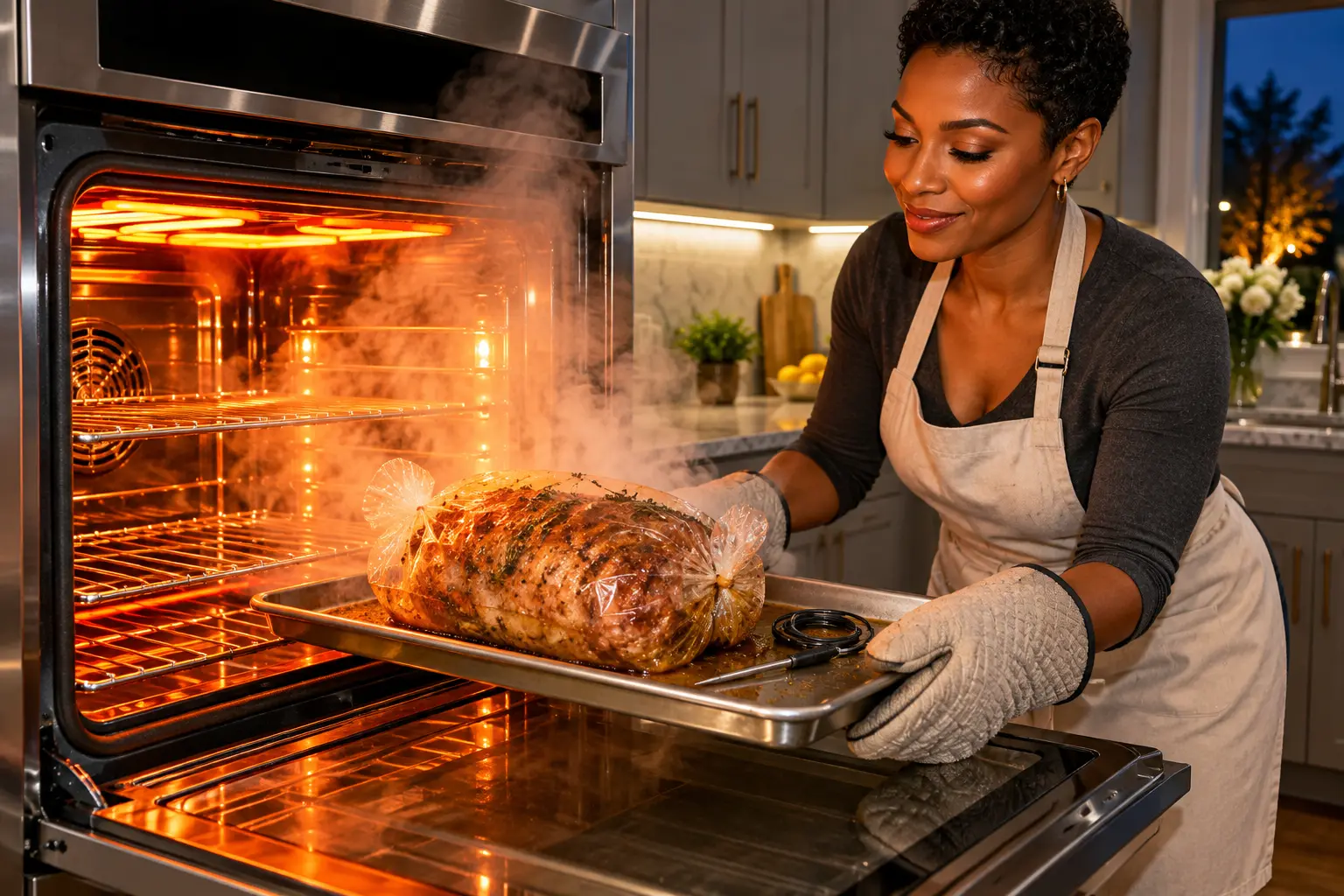
When to Use a Bag for Air Sous Vide
Once the oven can hold the temperature the food feels, you still choose the surface. Full steam, a bag, or a dry cavity will change the crust, the skin, and how close the cook sits to a classic water bath.
Cooks Shorter Than Four Hours
WHEN A BAG HELPS
- Long cooks: A bag is worth using on cooks longer than four hours when you want the surface to stay moist.
- Marinades: A bag holds a small amount of sauce against every side, so you can use less than a pan full of liquid.
- A dry crust: Skipping the bag can leave the outside drier, which helps a hearty crust on a roast you plan to sear.
An open rack is the simple setup for a same-day steak or chop in full steam, and a probe reaches the center without a seal in the way. Keep the bag for a long cook where a dry patch would bother you, or for a marinade you want against the meat.
Dry Sous Vide for Skin-On Food
Full steam is a poor match for skin. Poultry or fish skin that spends the cook in saturated air turns soft, and a later sear struggles to crisp it. Dry sous vide still holds the temperature the food feels, but the oven adds no steam, so the skin stays dry enough to brown.
To push humidity down, the oven runs the air a little hotter than the wet-bulb target, and that gap grows as the set temperature goes up. The mode is capped so the result stays precise, and that ceiling sits in the chart below. Leave the food unbagged, because a sealed pouch traps the moisture you turned steam off to escape.
- Choose Dry Sous Vide, or turn steam off while sous vide mode stays on, if that is how your panel labels it.
- Leave the chicken, duck, or fish unbagged on a rack, skin side up.
- Pat the skin dry, then finish in a hot pan, under the broiler, or on a grill.
Use dry sous vide for cooks of about four hours or less. A much longer dry cook can parch the meat, which is when full steam and a bag are the kinder choice.
Brands That Still Ask for a Vacuum Bag
Some ovens that show air sous vide on the panel still want the food in a vacuum bag. The bag holds the moisture, and the oven’s job is steady low air around it, with no water bath to set up or empty. Read your row before you copy a bagless recipe onto a different machine.
The Thermador air sous vide instructions require a vacuum sealer and a compatible bag, and the sealed bag goes on a sheet pan.
| Oven mode | Temperature range | Steam | Bag |
|---|---|---|---|
| Anova sous vide | 77°F to 208.4°F (25°C to 98°C) | 100% | Optional; bag after four hours if you want a moist surface, or for a marinade |
| Anova dry sous vide | 77°F to 197.6°F (25°C to 92°C) | Off | Do not use a bag |
| Thermador air sous vide | 130°F to 210°F | Low circulating air; the bag holds the moisture | Required, with the bag on a sheet pan |
| Electrolux air sous vide | 100°F to 205°F; Electrolux says most ovens cannot go below 170°F | Controlled heat and airflow | Not required |
A normal bake dial is a clumsy stand-in for the bottom of the ranges in the chart. If your manual disagrees with a cell, follow the manual, since a software update can move a limit.
How to Set Air Sous Vide on Your Oven
With your row chosen, the cook is a short sequence. You can use the same times and target temperatures you already trust from a water bath, and a probe lets you watch the center instead of relying on the clock alone.
- Select the mode. On a Precision Oven 2.0, choose Sous Vide or Dry Sous Vide from the home screen, or toggle sous vide inside manual cooking. On a 1.0, press the thermometer icon next to the oven temperature. On a connected wall oven, install the update if the mode is missing, then select it.
- Season the food, and bag it only when your row says to. Use a rack or a sheet pan so air can move, and lay a vacuum bag flat on the pan when the maker asks for that.
- Set the temperature to the doneness you want in the center. Use full steam for a classic match to a water bath, or leave steam off for skin-on food in dry sous vide. Rear heat and a high fan keep the cavity even if you are setting the mode by hand.
- Start the clock when the food goes in. Recipe times built for this style of oven already include the drop that follows an open door.
- Cook until the time is up or a probe in the thickest part hits the target. Pat the surface dry, then sear in a hot pan, under the broiler, or on a grill.
A well-seasoned cast iron skillet suits these lower-temperature steamy cooks, and a sheet pan is the simple alternative beside it. Give each pan the rack position the oven expects so air can move around the food.
Anova’s mode tour on video shows those choices on the real panel, including full steam, dry sous vide for skin, and the probe shortcut for a center you want done sooner.
Sous Vide Express With the Probe
A probe is awkward in a water bath, because the wire has to pass through a seal. In this oven the food can sit open, so you can cook to a temperature instead of a time.
If you want the center sooner, set the oven a little hotter than the probe target. A wider gap finishes faster, and the color from the edge to the center is less even.
A TWO-POUND ROAST
- The target: Set the probe to 145°F for the center of a 2-pound beef roast.
- The offset: Add 5°F (2.5°C) for every pound (450 grams), which comes to 10°F, so the oven is set to 155°F.
- Smaller cuts: A piece under 1 pound gets only that 5°F bump.
That hotter air can shorten the cook by as much as half compared with a matched water-bath time. Pull the food when the probe says the center has arrived, then pat the surface dry so the sear can build a crust.
Foods That Cook Well With Air Sous Vide
The mode suits foods you would trust to a water bath, plus pieces that never fit a bag. A prime rib or a whole turkey can go on the rack. A weeknight batch of steaks or chicken breasts can go in together.
| Food | Setup | What you get |
|---|---|---|
| Steaks, chops, and lamb | Full steam; bag only if your chart row says so | Even color, then a sear |
| Skin-on chicken, duck, or fish | Dry sous vide, no bag | Skin that can still crisp |
| Boneless chicken and tender fish | Full steam | A moist center without waterlogged skin to fight |
| Artichokes, corn, fingerling potatoes, sweet potatoes | Full steam, unbagged | Tender vegetables without a pot |
| Eggs in the shell | Full steam, no bag | The shell does the sealing |
| Large roasts | Full steam on a rack | A size a home vacuum bag often cannot hold |
One Anova sheet pan holds up to eight steaks or eight chicken breasts, and the cavity fits two of those pans on the racks. Keep the food in a single layer so steam or dry air can reach each piece.
Salmon is a friendly first cook. Weldon Kennedy, cofounder and CMO of Copper, likes fillets with a light lemon and brown sugar glaze, with the oven set just above the internal temperature you are aiming for. Check that aim against the safety chart below before you lock in a low number from a recipe card.
Common Mistakes With Air Sous Vide
Check two things before you blame the oven: whether you used the steam and the bag from your row of the chart, and whether you left time for a hot sear after the low cook.
MISTAKES THAT SPOIL THE COOK
- A low bake: Dialing a normal oven down does not give you wet-bulb control, so the air can run hotter than the surface and the outside overshoots.
- Wet skin: Full steam softens poultry skin, and a sear cannot fully fix skin that spent the cook waterlogged.
- An open long cook: Leave a many-hour roast unbagged and the surface can dry even with steam, unless a dry crust is what you wanted.
- Bag in dry mode: The pouch traps moisture you just turned off, so the skin you hoped to crisp stays soft.
- No sear: The mode keeps the inside even and the outside pale, so browning has to be a second step.
- The wrong pouch: If the manual requires a sous-vide-compatible bag, a thin freezer bag is not the tool the mode was built around.
Choose a well-seasoned cast iron skillet when you want a pan in a steamy cook, or use a sheet pan. Give the racks room so air can move around each pan the way the oven expects.
Safe Internal Temperatures for Air Sous Vide
The number on the oven is not proof the center is done. A thick roast reaches the set point later than the cavity does, so a probe in the thickest part is the reading that counts. The safe minimum internal temperatures below are the ones to meet before you eat.
| Food or rule | What to follow |
|---|---|
| Beef, pork, lamb, and veal steaks, chops, and roasts | 145°F, then rest at least 3 minutes |
| Ground beef, pork, lamb, and veal | 160°F |
| Poultry | 165°F |
| Danger zone | 40°F to 140°F, where bacteria can double in as little as 20 minutes |
| Time on the counter | No more than 2 hours, or 1 hour if the room is above 90°F |
| A normal roast in the oven | An oven temperature no lower than 325°F |
Poultry is the temperature people misjudge, at 165°F, because a pale, juicy breast can look finished while the center is still behind. Leave the probe in the thickest part until it gets there.
Whole cuts need the rest listed in the first row before you carve, and ground meat uses the higher row, with no rest called out there. Maker charts list doneness targets below these minimums, and a lower temperature needs a tested hold time from the oven maker or a food-safety authority, not a guess.
The bottom rows are the counter rules and the hot-oven roast, which is a different method from this one. Food safety times and temperatures you already follow for a water bath apply the same way here.
Frequently Asked Questions
Can a Regular Oven Do Air Sous Vide?
A normal oven is a poor stand-in. It measures the air in the cavity rather than the cooler wet surface of the food, and it is built to swing around a hotter roast. The plain answer from the maker of the Precision Oven is that this generally will not reproduce the cook. Use the mode only on an oven that offers it.
Do You Need to Preheat for Air Sous Vide?
You do not preheat a Thermador oven in this mode. Set the temperature, put the vacuum-sealed bag on a sheet pan, and let the oven bring the food up to that number. If your manual never mentions a cold start, follow its chart rather than copying another brand.
Where Do Meat Juices Go Without a Bag?
The juices drip into the pan. At full humidity you can pour them into a sauce or gravy, so an open cook does not throw that liquid away. Use a bag when you want a marinade or a fat against every side, because sauce pooled in a pan only wets the bottom. A steak cooked in a water-bath bag sheds juice into the bag too, so the open oven is not the only method that leaves some liquid behind.
Is Air Sous Vide the Same as Air Fry?
Air fry is the high-heat mode with steam off, and on an Anova Precision Oven it starts at 213°F. Sous vide mode stops at 208.4°F (98°C) and can fill the cavity with steam, so any browning still happens in a pan, under a broiler, or on a grill.
What Temperature Swing Is Normal in Sous Vide Mode?
With sous vide mode on and the set temperature at or below 212°F (100°C), the oven can move by as much as 1.8°F (1°C). With the mode off and the set point above 212°F (100°C), the swing can reach 10°F (5°C). The tighter band is what a long low cook needs, which is why the mode is separate from bake.
Can You Chill an Air Sous Vide Cook for Later?
Vacuum-seal the food first if you plan to chill it and keep it. For a cook-chill, sealing before the oven runs means the food is pasteurized inside a closed pouch and then stays protected from kitchen air. A bagless piece you will eat the same day does not need that step.
A water-bath time and temperature can move to the oven once the mode matches the chart for your brand. You still choose full steam, a bag on a long cook, or a dry cavity for skin you plan to crisp, and you still check the thickest part with a thermometer before the sear.
Disclaimer: This article is an educational guide to a cooking mode and is informational only. It is not food-safety, medical, or appliance-repair advice, and it does not replace your oven manual. Check doneness with a food thermometer and confirm temperatures, bags, and steam settings with the maker or a qualified appliance technician before you rely on them. Figures and mode limits reflect the maker pages and USDA guidance used here, and those instructions can change.

Clay Moulds From the Blyth Hoard Fit Peebles Fittings

Treasury Yields Hit a 24-Year High as AI Joins the Queue

Crew-12 Leaves the ISS With Fedyaev and Adenot Aboard

The Graziers Recall Puts the 60-Day Cheese Rule on Trial

Hugo Chavez’s Hollywood Welcome Meets a Film About Escape

Sons of Behemat Add a Witch and a Middle Rank

Canada Still Clears Mazatlán as the Cartel War Arrives

The FTC Suit That Targets Amazon’s Hidden Ad Floor

Samsung Leads Mistral’s Record European Sovereignty Round

Laepple Automotive Bets on a Vacant Detroit Die Shop
-
 GAMING2 months ago
Sons of Behemat Add a Witch and a Middle Rank
-
 NEWS2 years ago
Canada Still Clears Mazatlán as the Cartel War Arrives
-
 BUSINESS3 months ago
The FTC Suit That Targets Amazon’s Hidden Ad Floor
-
 NEWS2 months ago
Samsung Leads Mistral’s Record European Sovereignty Round
-
 AUTO2 years ago
Laepple Automotive Bets on a Vacant Detroit Die Shop
-

 NEWS3 months ago
Apple’s Foldable iPhone Event Revives the Fingerprint Button
-

 LIFESTYLE2 years ago
Hot Honey: What It Does on UK Restaurant Menus and at Home
-

 LIFESTYLE2 years ago
Women Gym Affairs: Why They Start and What to Do After